

“It is well established that the endocardium of the atrial septum is rich in autonomic nerve fibers and, thus, may serve as a portal for the entry of HSVs.” – Dr. Ioannis S. Pateras
Herpes is usually associated with genital sores, fever blisters, cold sores, sexually transmitted infections and social stigmas. However, a study links both genital herpes and oral herpes to the development of tumors of the heart.
“This study has shown that HSV DNA is detected significantly more frequently in cardiac myxomas than in their normal counterparts.” In addition, the researchers reported that “the detection of HSV-2 as the infectious agent in two myxoma cases reflects a novel finding.” [1]
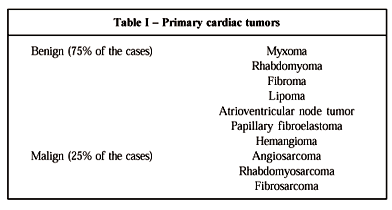
This is important because myxomas, tumors of primitive connective tissue, are the most common type of tumor in the heart. [2]
“Of particular interest is the recognition of HSV-2 as a potential cardiovascular pathogen. The virus has been implicated in coronary artery disease and carotid atherosclerosis.” – (Journal of Biomedicine and Biotechnology)
Common clinical manifestations of myxomas are strokes, peripheral or pulmonary embolization, fever, weight loss, high sedimentation rate, anemia, and leucocytosis. [3]
The public should be aware of the fact that herpes could lead to the development of heart tumors over time.
Additionally, it should be remembered that the herpes family of viruses may be oncogenic (cancer causing), and thus more dangerous than simply causing typical symptoms (such as genital herpes outbreaks.)
For example: “two others members of Herpesviridae family have been long ago established as oncogenic agents, Epstein-Barr virus (EBV) and Human Herpes Virus type 8 (HHV-8). EBV is associated with the development of Burkitt’s lymphoma, Hodgkin’s lymphoma (B-cell), and nasopharyngeal carcinoma, and HHV-8 is having a causal role for the development of sarcoma Kaposi.” [1]
References:
[1] Ioannis S. Pateras,1 Konstantinos Evangelou,1 Katerina Tsimaratou,1 Michalis Liontos,1 Stratigoula Sakellariou,2 Theodoros Barlogiannis,1 Petros Karakitsos,3 Apostolos Papalois,4 Athanassios Kotsinas,1 and Vassilis G. Gorgoulis1 “Detection of Herplex Simplex Virus-1 and -2 in Cardiac Myxomas.” Journal of Biomedicine and Biotechnology, Volume 2012 (2012).
[2] Dorland’s Medical Dictionary
[3] K. A. Ekmektzoglou, G. F. Samelis, and T. Xanthos, “Heart and tumors: location, metastasis, clinical manifestations, diagnostic approaches and therapeutic considerations,” Journal of Cardiovascular Medicine, vol. 9, no. 8, pp. 769–777, 2008.